Categories
Uncategorized

CT (Computed Tomography) Scan

CT (Computed Tomography) Scan

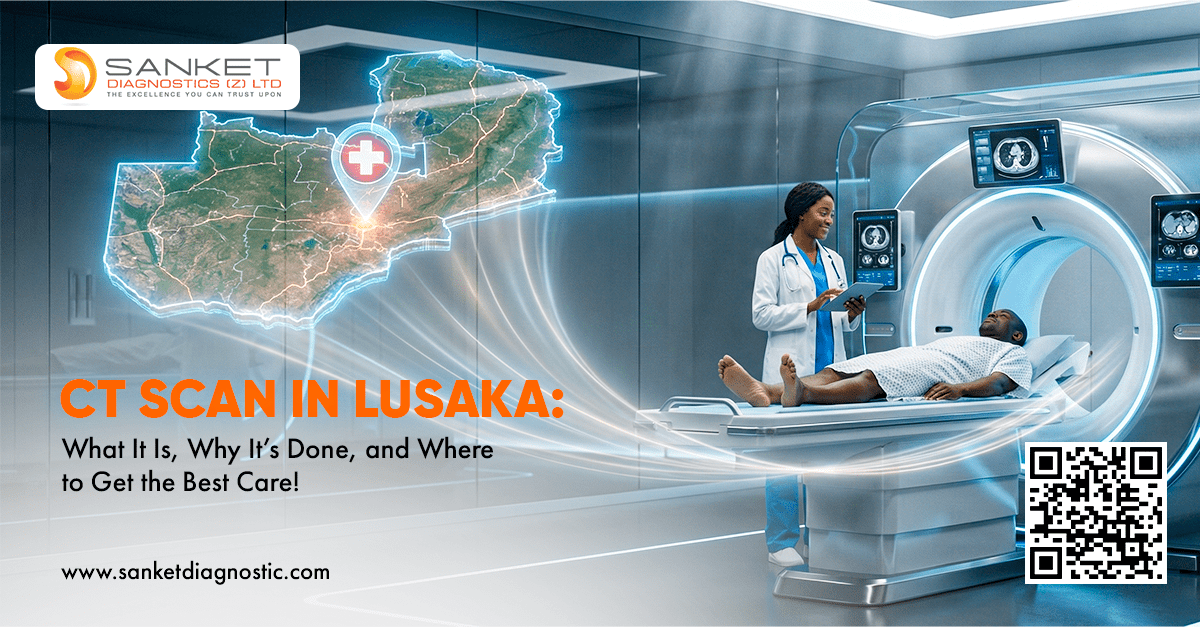
Used by Doctors to mostly detect disease and injuries, CT or Computed Tomography Scan uses a series of X-rays and a computer to form detailed images of one’s bones and tissues. It is a non-invasive procedure and is painless.

For a CT Scan one needs to lie down on a table that slowly slides into the scanner. It then provides detailed clear pictures of the desired body organs, muscles or bones.

What is a CT scan and why is it done!

CT Scan is a type of imaging that uses X-ray techniques to create detailed images of the body and furthermore with the help of a computer cross-sectional images are created, also known as slices, of the desired bone, blood vessel or soft tissue. The images derived from a CT Scan are more detailed than a simple X-ray.

A CT scan has multiple uses from diagnosing disease or injury to helping Doctors in planning medical, surgical or radiation treatment.

The images derived from a CT scan are a combination of multiple X-ray pictures taken from various angles to create a 3D image. This lets the Doctor see each part clearly and is hence much more detailed than a normal X-ray.

You may be suggested to go for a CT scan for many reasons. For instance, a CT scan can help:

  • To diagnose muscle and bone state, like bone tumors and breaks, also commonly known as fractures.
  • Locate a tumor, infection or blood clot.
  • Guide in procedures like surgery, biopsy and radiation therapy.
  • Analyse the progress in the condition of patients in cases of cancer, heart disease, lung nodules and liver masses.
  • Help in finding injuries and bleeding inside the body that might happen after a trauma.

CT scans can detect abnormalities like tumors, injuries and diseases. For instance:

  • Pneumonia and emphysema
  • Heart disease
  • Blood clots
  • Bowel disorders (appendicitis, diverticulitis, blockages, Crohn’s disease)
  • Kidney stones
  • Brain injuries
  • Spinal cord injuries
  • Internal bleeding

How does one prepare for a scan?

Your trusted diagnostic lab — offering the best CT Scan services in Lusaka — will tell you everything you need to know before a CT scan. Here are some common guidelines one can follow:

  • Schedule your appointment beforehand and arrive a little early to avoid delay.
  • Wear comfortable clothes for the CT Scan and remove all metal jewelry. You might be provided with a gown for the CT Scan.

Sometimes your provider might use contrast that helps to make certain tissues, organs or blood vessels easier to see. In case a contrast is being used, the provider will inject the contrast (dye) into your vein through an IV. Interestingly, at Sanket Diagnostic for CT Scan in Lusaka, we use high-quality contrast that has no effect on the kidney and you can simply skip your creatinine test.

What to expect when you go for a CT Scan?

When one goes for a CT Scan test, the patient lies on the back on a table (like a bed). When the CT scan begins:

  1. The bed slides into the machine. The patient needs to stay as still as possible.
  2. The scanner will take pictures of the area that needs to be scanned.
  3. When the scan is over, the table slides out of the scanner.
  4. A trained technologist will be present for the entire CT Scan.

How long does a CT scan take?

CT scans usually take approximately 30–40 minutes, most of the time is for preparation. The CT scan itself usually takes fewer than 4–5 minutes.

Are there risks or side effects?

CT scans are safe. Similar to X-rays, CT scans use a minimal amount of ionizing radiation to capture images. The level of radiation you’re exposed to is comparatively very less. One should definitely talk to the healthcare provider to make informed decisions about your CT Scan.

What happens after a CT scan?

It is safe to go home after a CT scan and resume normal activities.

The images are then analyzed by a Radiologist and the findings are explained.

How much time does it take to get the results?

Approximately 24 to 48 hours to get the results of your CT scan. In an emergency setting, and if the provider is informed beforehand, results can be provided in an hour or so.

FAQ’s

Can a CT scan detect cancer?

Yes. CT scans detect cancer because they show tumors, abnormal growths or changes in your organs that could be cancer. Providers also use CT to see if cancer has spread or if treatment is working.

Is a CT scan safe during pregnancy?

One should inform the provider about pregnancy. In the case that CT scans are of the pelvis and abdomen, there are chances of the fetus getting exposed to radiation, but it usually isn’t harmful. CT scans of other parts of the body have almost no exposure to the fetus.

A Note from Sanket Diagnostics

Sometimes a CT Scan can be overwhelming. One should always choose a Diagnostic Lab that offers CT Scan services with high-quality contrast. At Sanket Diagnostic, we provide all types of CT Scan in Lusaka and use contrast that has no effect on the kidney. You can also get reporting within 2 hours by an experienced radiologist team. Being ranked as one of the best Diagnostic Labs in Zambia, we are glad to provide CT Scan services in Zambia.


Categories
Uncategorized

MRI Scan Sanket

MRI (Magnetic Resonance Imaging. MRI creates clear images of the body’s internal structures: organs, muscles, bones and blood vessels. MRI is a painless, non-invasive diagnostic test which is based on magnets, radio waves and a computer, but no radiation.

The time taken for an MRI is usually more than any other normal test and it can seem to be a difficult task. Knowing the details of the test can help one be prepared physically as well as mentally.

In this article we have covered What is MRI, why it is required and how one can prepare for it

What is an MRI Scan?

It is an imaging test that generates detailed and cross-sectional images using radiowaves, magnets and a computer. The doctor can examine the following areas of the body with the help of MRI

1. Brain and Surrounding nerves
2. Heart and Blood vessels
3. Liver
4. Kidney
5. Breast tissue
6. Spine and spinal cord
7. Bladder and reproductive organs
8. Lymph nodes

Two types of MRI imaging machines are : open MRI and closed MRI.

In an open MRI machine, the structure is more open in comparison with a closed MRI with both sides open, and two magnets placed on the top and bottom of the table on which the patient lies.

A closed MRI machine resembles a tube-like structure open only at the entrance. It is closed and comprises a ring of magnets. A closed MRI can take better images than an open MRI, however sometimes is a little uncomfortable for certain patients.

Contrast MRI: A contrast dye can be injected into the veins to increase the quality of the images.

When is one prescribed for an MRI?

Your doctor can recommend to go for an MRI scan near you to better diagnose the symptoms of problems in:

1. Brain
2. Spinal cord
3. Heart
4. Internal organs
5. Bones
6. Breast

What is the purpose of an MRI?

MRI of different organs or body parts is usually done to diagnose various issues. Common MRIs and their purposes are:

1. Brain MRI is used to diagnose:
• Brain Tumour
• Inner eye and ear conditions
• Stroke
• Brain injury from trauma

2. Cardiac MRI is usually used to check for:
• Blockages in the blood vessels
• to determine the damage in the heart after a heart attack
• Structural problems in the heart
• Heart tumours or infections

3. Body MRI scan usually diagnoses for:
• Tumours in the chest, abdomen or pelvis
• Liver diseases like cirrhosis
• Inflammation of blood vessels
• Pregnancy

4. Bone MRI usually checks for:
• Bone tumours
• Bone infections
• Joint issues due to injury

 How should you prepare for an MRI scan?

Here are a few steps involved in the preparation for an MRI scan:

1. Usually, before an MRI test there is no restriction on eating, drinking, or taking medication. However, for some special MRI scans (like pelvic MRI), the doctor can advise fasting before the test.

2. Before the MRI scan, it is necessary for the patient to remove all clothing and change into a hospital gown.

3. The patient should definitely remove all metallic objects and inform the authorities about any metal implants before the test.

4. The doctor can advise medication before 12 hours of the test, in case the patient is allergic to the contrast dye.

5 steps of a Procedure of MRI

1. The patient changes into a hospital gown after removing all metal objects. The patient is then asked to lie down on a narrow table which then moves into the MRI machine

2. The patient is asked to stay still for the duration of the MRI so that the machine can capture correct images

3. The test usually takes approximately 20 to 50 minutes.

4. The areas where the machine focuses to take images might feel a little warm.

5. After the MRI is done, the patient is asked to change back into their clothes and feel comfortable.

MRI Scans are preferred to create clear images. It is safe to have repeated scans as it does not involve radiation. Sanket Diagnostic has the latest MRI Scan Hitachi 0.3 Airis 2 that is one of the most advanced MRI Set-Up and is one of the only Diagnostic Lab to offer MRI Scans in Lusaka. Upon noticing any symptoms or getting prescribed for an MRI one must go to the best MRI Scan Services available and get tested.

 FAQs

1. Is an MRI safe?

Since MRI doesn’t involve radiation. It is usually considered safe.

2. Is MRI expensive?

MRI is usually affordable and the prices vary as per the body part. At Sanket Diagnostic, one can reach us at +260 974642600 to know the prices and ongoing discounts if any.

Categories
Uncategorized

What is the HbA1c test?  

Why are mammograms important?

One of the most important breast cancer screenings available for today’s women. Mammograms have become the most important factor for early detection, which certainly helps in improving the survival rate.

There are two types of mammograms:

Screening mammogram: Women who are 40 years old and above whether have breast cancer risk factors or even if not experiencing any symptoms of breast cancer should consult the doctor and go for a screening mammogram.

Diagnostic mammogram: In case the initial screening mammogram results show something abnormal, for women who are at increased risk of developing breast cancer or are experiencing signs or symptoms of breast cancer should receive a diagnostic mammogram.
Always consult a doctor before deciding which type of mammogram and screening timeline is recommended for you.

What to expect for your Mammogram!

Whether you are going  for a screening mammogram or a diagnostic mammogram, preparing for it is essential for the successful completion of this important screening.

You should always discuss recent changes or problems in your breasts with your doctor.

Always check for a change in shape, size, or texture, or feel a lump in either breast or surrounding area, you should see your doctor to discuss the changes and determine the next steps to take. If you are experiencing any sort of breast changes, your doctor is most likely to recommend you for a diagnostic mammogram. 

Choose the right facility!

In case that the doctor has prescribed you to go for a  screening mammogram, or a diagnostic mammogram, do not put off scheduling this important screening, as early detection plays a very important role. You should choose an imaging facility that specializes in mammograms and has all the facilities and does many mammograms a day. Also try to find a facility that offers 3D mammograms, or tomosynthesis. This type of advanced mammogram helps in detecting cancer more accurately than older X-ray analog mammograms. A lot of times women usually  face barriers when it comes to scheduling a mammogram, like location a good mammogram facility near them, being able to find a mammogram facility which is affordable, or even knowing what to ask for when scheduling an appointment.

Schedule your mammogram when your breasts are the least tender or swollen
One should be considerate of the naturally occurring hormone fluctuations within the body, many women experience tender or swollen breasts at some point during their monthly menstrual cycle. One should generally avoid scheduling mammograms the week before and during your period, when your breasts are in their most tender state. If possible, try to schedule your mammogram for one to two weeks after your period starts.

How to prepare the day of your mammogram

You should always check with your mammogram facility for any specific guidelines they may have, and follow the best practices listed below. Avoid using any deodorant or other health and beauty products before your mammogram Wearing/applying health and beauty products on the day of your mammogram can interfere with the mammogram reading. If you already have deodorant or other products applied to your breasts, chest, or underarms on the day of your appointment, you should ideally wash it off with soap and water. However, if you are unable to shower or bathe before your appointment, as for wipes at the imaging facility available for you to remove any products from your body.

What to do on your mammogram appointment day

Opt for a two-piece outfit and a pair of comfortable shoes.
You would be asked to remove only your top and bra for a mammogram and hence  it is best to wear a two-piece outfit, so that you can  easily remove your top/shirt.
Any neck jewelry and long earrings are a no for the mammogram.
You can choose to follow a normal diet on the day of the appointment as usually there are no dietary regulations recommended before a mammogram. In case that you  take daily medications, you should take your medications as prescribed.

You should remember to communicate all related information to your mammogram technician before the screening begins such as:
Any breast changes or problems you are facing
If you have breast implants
If you are breastfeeding
If you are pregnant

In the end choosing Sanket Diagnostic, the best imaging facility in Zambia for Mammogram can help you get accurate results with on time reports. So don’t delay your mammogram and get in touch with the best team of experts 


Categories
Uncategorized

What is the HbA1c test?  

What is the HbA1c test?

For someone who has diabetes or has high blood sugar might be knowing about the HbA1c test.
What exactly is this test and how can it help in controlling diabetes? What is the frequency in which this test should be repeated?
Read more to find the test.

HbA1c Test

HbA1c, also widely known as hemoglobin A1c or A1c, is a term widely related to diabetes. This test depicts the average blood sugar level in the past week/month and is also used for diagnosing diabetes. For diabetics patients HbA1c is recommended on a regular basis, and helps in planning your diabetes medications.

HbA1c is glycated hemoglobin, which is glucose joined with hemoglobin present in the red blood cells.
Haemoglobin is a protein present in RBCs (Red Blood Cell).

The HbA1c level is crucial to monitor for diabetics patients, as the higher HbA1c level is greater is the risk of diabetic complications.

How does it work?

Glucose is the level of sugar in your blood cells, which tens to join the hemoglobin present in the blood cells. The level of glucose dilation with hemoglobin is measured by HbA1c test.

Since, the life of a Red Blood Cell is around three months, so the HbA1c test measures the average glucose level of the previous three months.

HbA1c will be greater, in case the level of glucose in your blood cells has been higher over the past weeks/month.

How is this test useful?

Over the period of past two to three months, the average plasma glucose in your blood stream is determined by the Haemoglobin A1c test, it also depicts the glucose stuck onto your red blood cells for that amount of time.

The test usually does not require any pre requisites  or fasting and can be performed at any time of the day.

In recent times this test is one of the most preferred for diagnosing and monitoring diabetes and due to its reliability is also preferred by all leading doctors.

The usual display of you as diabetic, pre-diabetic or normal falls under the given levels:

HbA1c Mmol/mol Percentage
Normal Below or up to 40 mmol/mol ≤ 6%
Prediabetic Between 42 to 47 mmol/mol 6% to 6.4%
Diabetic 50 mmol/mol or above ≥ 6.5%

Normal: 4% to 5.6% is considered normal

Pre-Diabetic: 5.7% to 6.4% indicates a high risk of diabetes, and

Diabetic: Above 6.5% or above, it indicates that the person has diabetes

Normal H1bA1c test level for a diabetic

For someone with diabetes below 53 mmol/mol is considered healthy and controlled
Glycated hemoglobin between 53 mmol/mol to 63 mmol/mol is considered decent however certainly needs improvement

Between 64 mmol/mol to 86 mmol/mol can be taken as an alarm and he/she needs to change their lifestyle and take timely medication.

Above 86 mmol/mol shows an extremely high-level glycated hemoglobin and needs urgent help for medical professionals.

Changes in sedentary lifestyle by including 30-40 min of exercise in the daily routine and proper timely medication can help one control diabetes.

The test should be repeated every three months for anyone with diabetes to regularly monitor their sugar level.

Diabetes can be controlled by maintaining a well balanced diet, increasing physical activity and timely medication.

In case that you are above the recommended weight range and have type 2 diabetes, losing the weight slowly can gradually improve your blood sugar level. People have been able to control their diabetes by weight management and opting for healthier and balanced diets.

In case that you are taking insulin, screening and regular monitoring is advisable.

Choose Sanket Diagnostics for an accurate and precise screening of your H1bAc1 level.  Get a detailed report with all the necessary details, within an ideal time. Visit the nearest Sanket Diagnostic lab near you to know more about the test.

Categories
Uncategorized

What is the purpose of a Double Marker Test?

What is the purpose of a Double Marker Test?

A series of tests is conducted during the pregnancy journey, to rule out any medical condition or abnormality in the fetus and to also monitor the health of the mother and the baby. To ensure that the fetus does not have any chromosomal disease, one such test is prescribed which is known as dual marker test.
Let’s try to understand the procedure, and purpose of the test and its results. 
What is a Double Marker Test?
Conducted in the first trimester of the pregnancy, the double marker test is used to identify the risks of chromosomal abnormalities in the fetus.
The level of Beta-hCG (beta-human chorionic gonadotropin) & PAPP-A (Pregnancy-Associated Plasma Protein A) is measured by the dual marker test. Risk of chromosomal abnormalities like Down Syndrome & Edward’s syndrome is depicted by the altered presence of these markers in the blood sample of the pregnant woman.

Dual marker test is usually advised to a woman who is above 35 years or for couples who have a family history of chromosomal abnormalities. It is not a mandate test during the pregnancy journey.

The Doctor usually prescribes diagnostic tests after the screening test confirms the abnormalities. Dual marker is only a predictive test and does not confirm the disease in the fetus.

What are Chromosomal Abnormalities?
The irregularities in the number of chromosomes in the fetus DNA that cause the chromosomal abnormality is detected by the dual marker test.
A male fetus, 22 pairs of autosomes and a pair of XY chromosomes however a female fetus is supposed to have 22 pairs of autosomes and a pair of XX chromosomes and . The chromosomal abnormality can have a division as given below: 
Patau’s Syndrome: An extra copy of chromosome 13, it is also known as Trisomy 13
Edward’s Syndrome: Edward’s Syndrome is also widely known as Trisomy 18 

An extra copy of chromosome 18 depicts Edwards’s Syndrome.

Down’s Syndrome: A duplication of the 21st chromosome, also known as Trisomy 21

Procedure for the Double Marker Test.
The test is usually performed  between weeks 11-14 weeks in the first trimester
The double marker test depicts the beta-hCG and PAPP-A in the blood. The placenta secretes a glycoprotein known as Beta hCG. In case that there is a rise in the level of the hormone, that indicates the risk of Down Syndrome on the other hand PAPP-A is a plasma protein and a lower level of this hormone is also associated with Down Syndrome. 

Double marker test consists of a blood test and an ultrasound called nuchal translucency (NT) scan. 
Real-time images of the fetus are collected to get a clear area at the back of the fetus’s neck with the help of NT Scan. It determines the fluid collection at the back of the neck, more fluid is a clear indication of Down Syndrome.

The clear understanding of the potential risks of chromosomal abnormalities in the development of a fetus, is derived through the Double Marker Test. 

 Understanding the results of a Double Marker Tests. 

The result falls into three categories: low risk, moderate risk and high risk.

Low risk indicates a very low risk of chromosomal abnormalities in the fetus. In the case that the result shows a moderate or a high risk of abnormalities, doctors may suggest to go for further tests like NIPT 
(Non-Invasive Prenatal Testing), Aminocentesis, 
The results of the dual marker test can fall into any of three categories: low-risk, moderate-risk, and high-risk or chorionic villous sampling; these tests can further confirm the presence of any chromosomal abnormality in the fetus. 

 Usually the TAT of getting the result of a double marker test lies between 3-7 days.

The test offers crucial insights into the fetus’s health. To avoid any future complications the pregnant mothers must sincerely consider taking the double marker test.

In case that you are booking for a diagnostic lab in Zambia that provides Double marker test. You can book it with Sanket Diagnostics for accurate screening. 

Categories
Uncategorized

Factors to Remember while choosing the best Diagnostic Lab in Zambia  

Diagnostic tests play a very important role in helping the doctors to diagnose the root cause of a disease and plan the treatment accordingly. An established diagnostic lab is a medical lab set-up that offers the services of health tests to diagnose and provide reports based on the results.

One should be careful while choosing a Diagnostic Lab to get their blood tests done Given below are the factors that one should consider while choosing a diagnostic center: 

Accreditation & Licenses of the diagnostic lab– Check if your lab is NHIMA accredited before availing the services. It is one of the most important factors as this shows that the lab follow strict guidelines and maintains International standards of operations. It is important to note that it is only brands like Sanket Diagnostics with the experience of 30+ years in Zambia provide affordable tests while maintaining quality service.
Quality of staff, reports and the facility – Look for the reviews of the Diagnostic lab that you are opting for, ask your friends and family and about their experience before booking a test. The staff at the lab should be skilled and courteous towards all the patients. Look around the premises to check if the hygiene standards are maintained and don’t forget to ask the team if the instruments are sterilized regularly.

Equipment and Technology– The best diagnostic centers always consider instruments and equipment to be extremely important and are always updated with the newest technology. While choosing a diagnostic lab make sure that they have clinical pathology, molecular biology and to know more go through the brand’s website to understand better.

Distance – For some diagnostics tests you might need to fast for sometime, check with the diagnostic lab team beforehand to be prepared for the test. Also, be sure to check the distance of your lab from your home.

Services and policies – Do a quick check about the diagnostic lab policies and check if they maintain a good TAT & other services like home sample collection, mode of report delivery etc.

Affordability – When you select a diagnostic lab make sure to compare the prices and choose an affordable lab which is pocket friendly. 

Sanket Diagnostics is the most reliable diagnostic center with the latest equipment, qualified staff and with over 7+ labs in Zambia. It is one of the best labs in Zambia, with skilled staff and top notch equipment. With all lab tests under one roof, Sanket Diagnostics becomes an easy choice for anyone looking for the best diagnostic lab.


Need Help Booking a Test?

Get a call back within 15 minutes from our Health Advisor.